· 2 min read

Cognitive dissonance ₂

When confronted with cognitive dissonance, people experience negative emotions and resort to different coping strategies to deal with them.

The hardest of these coping strategies are to actually change your beliefs or behavior. The easy ones just make the stimulus go away.
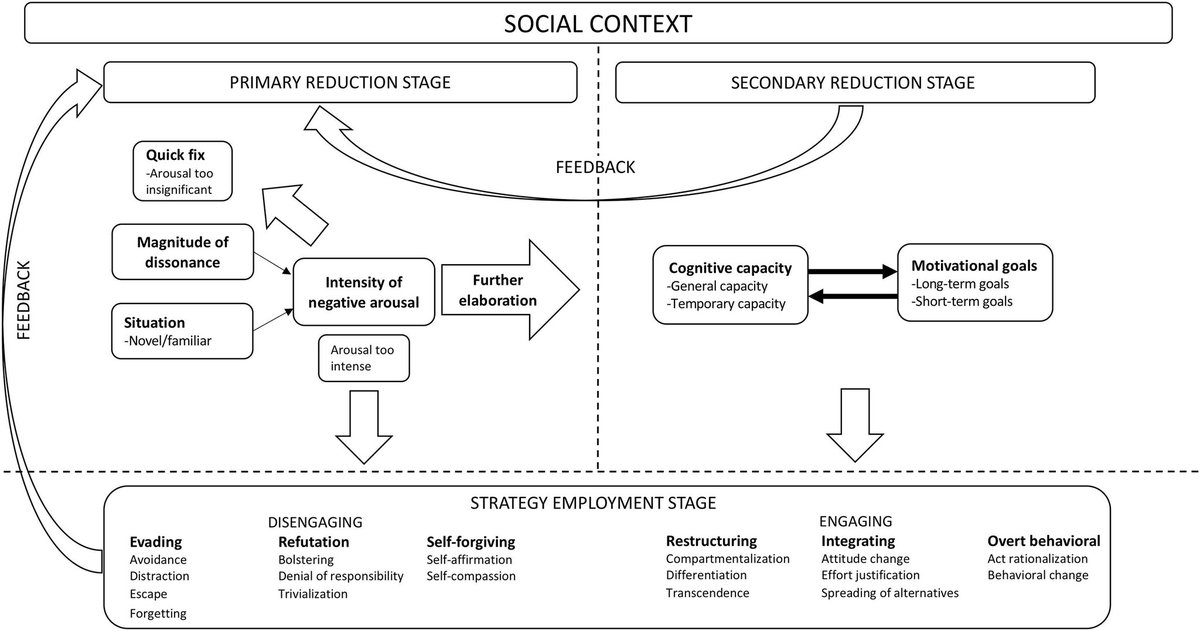
1480926297912225805-FI1OnoKXoAA_tu_.jpg

From A General Model of Dissonance Reduction: Unifying Past Accounts via an Emotion Regulation Perspective, 2020

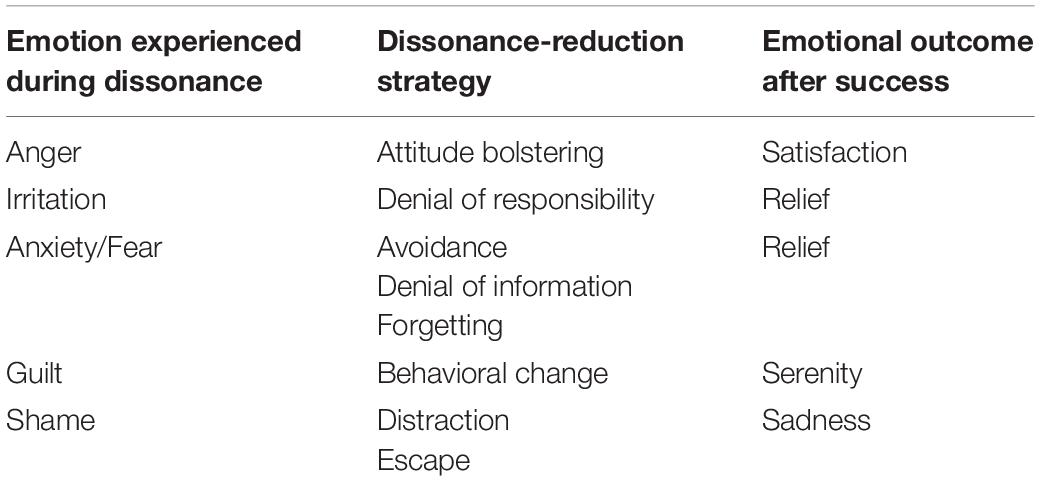
A table showing three columns: emotion experienced during dissonance, dissonance-reduction strategy, and emotional outcome after success. It lists emotions like anger, irritation, anxiety/fear, guilt, and shame, paired with strategies such as attitude bolstering, denial of responsibility, avoidance, etc., and outcomes like satisfaction, relief, serenity, and sadness.

View original