On May 6, 2024, I posted:
Watching in real time as ‘slop’ becomes a term of art. The way that ‘spam’ became the term for unwanted emails, ‘slop’ is going in the dictionary as the term for unwanted AI generated content.”
That was a prediction. Nineteen months later it came true.
The word was already floating around among my mutuals — people were using it as known slang for the Shrimp Jesus images, the LinkedIn summaries that start with “Highlights include: Key findings include:”, the AI Overview answers that confidently told you to put glue on pizza. I noticed it had crossed a threshold from joke to shorthand, wrote it down as a note for myself, and the post popped off. So I leaned in.
For a few months I retweeted every single mention. The repetition created a predictable association between my account and the word. Then other people started tagging me whenever they saw it, because they knew I’d retweet it. Once it became a recurring bit, the group chats started riffing — copying the meme, making variations, evolving it. Seed a word, amplify every instance, let the variations reproduce through social selection, and watch it evolve from slang into language.
Two days after my post, Simon Willison wrote about it for his audience, which is bigger and more technical than mine. He cited my post as the defining moment and put in the legwork to record people’s definitions. That’s where a lot of the media picked it up — the New York Times, Ars Technica, Max Read’s Substack.
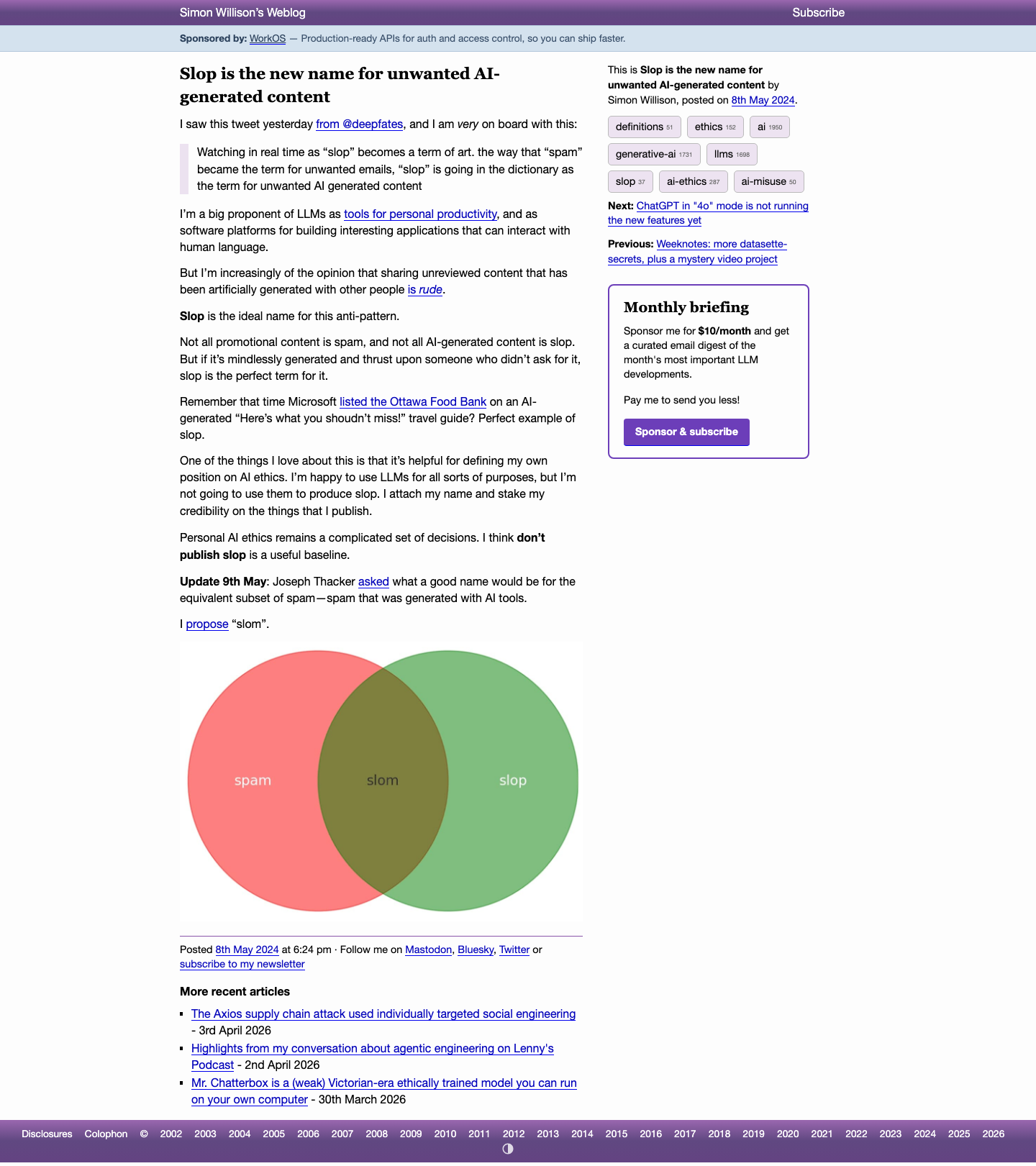
My favorite piece of coverage was Scientific American, where they credited both me and Simon. They called me “a poet and technologist” and stylized my name in the lowercase, like e.e. cummings or bell hooks. I didn’t realize I was a poet. But then I realized all tweets are poems. They’re short pieces of text meant to make you feel things.
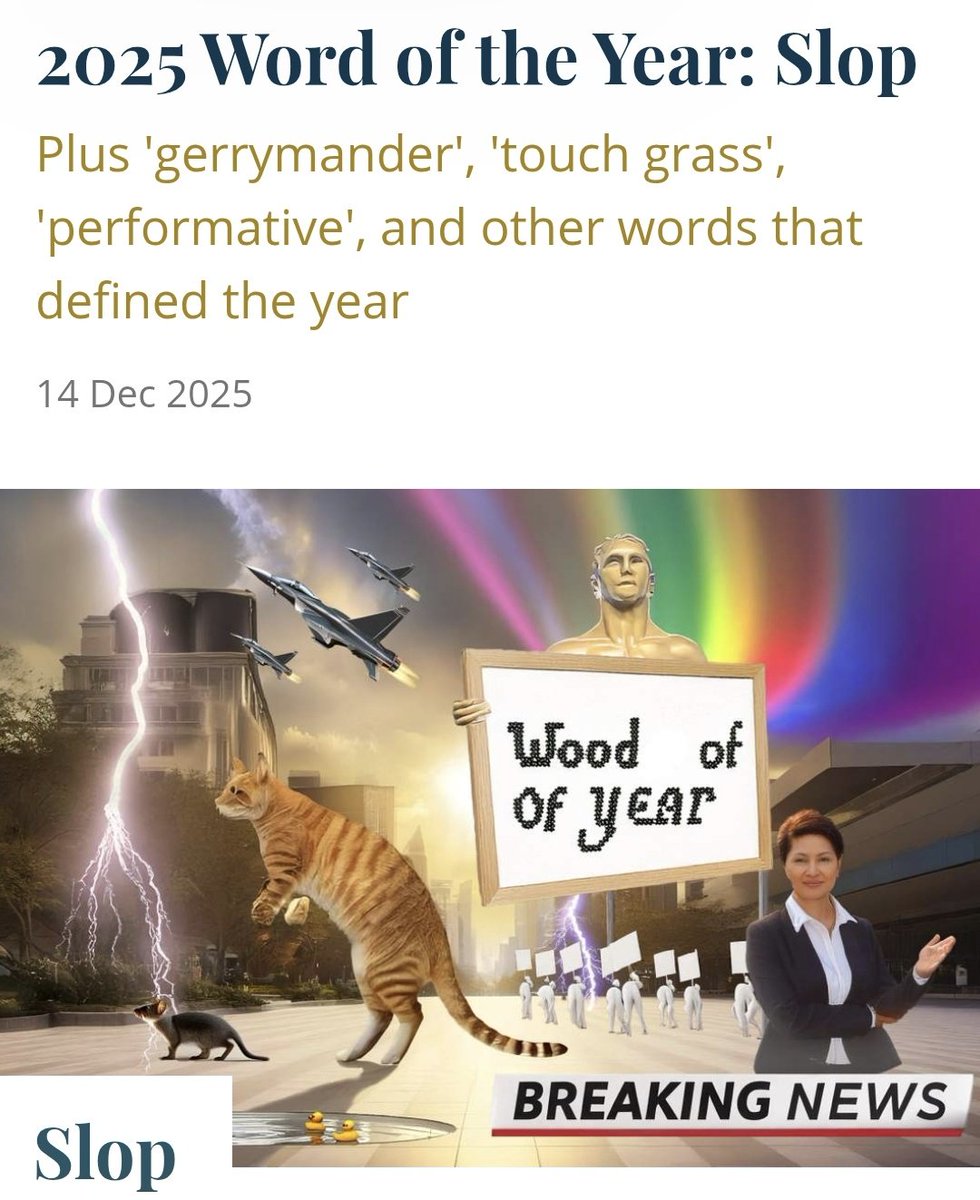
In December 2025, Merriam-Webster named “slop” their Word of the Year. The Economist and Australia’s Macquarie Dictionary made the same choice.
I posted the full account that night. I didn’t invent the word. I didn’t really define it or canonize it — Simon gets credit for that. Arguably I popularized it? Memed it up? Hyperstitioned it? We don’t have a good word for making something come true by speaking it into existence. Maybe the closest thing is “influenced.”
Dictionary influencer. I can live with that.